Skip to content
LR-Gutierrez

Full-stack engineer and team lead.

I build software where security is a design decision, not a final checklist.

Based
Caracas, UTC−4
Coding
Since 2019
Status
Open to remote and relocation
Now
Senior developer, PCI-DSS banking
Before
Information Security Manager, INAC
Stack
ASP.NET Core, NestJS, Angular, Kotlin, PostgreSQL

How I work

Security as a design input

I ran information security at Venezuela's civil aviation authority and now build inside a PCI-DSS banking environment. Authentication, data handling and failure modes are decided with the architecture, not audited after it.

Leading the team, not just the code

I've coordinated development teams end to end: gathering requirements with the people who use the system, planning and tracking work, and reporting progress to leadership.

AI in the development loop

I write Skills and MCP servers and orchestrate agents to speed up the repetitive parts of the cycle, while design decisions and review stay mine.

  • .NET
  • NestJS
  • Laravel
  • OpenJDK
  • JSON Web Tokens
  • Angular
  • TypeScript
  • React
  • Tailwind CSS
  • Kotlin
  • Android
  • Ionic
  • PostgreSQL
  • Prisma
  • SQLite
  • Linux
  • Proxmox
  • GNU Privacy Guard
  • WhatsApp
  • Firebase

Skills

Select one to see where I applied it

Backend

Frontend

Mobile

Data

Infrastructure

Security

Integrations

AI

Leadership

Every skill here links to a project or role where I used it. Nothing listed without evidence.

Selected work

03 projects

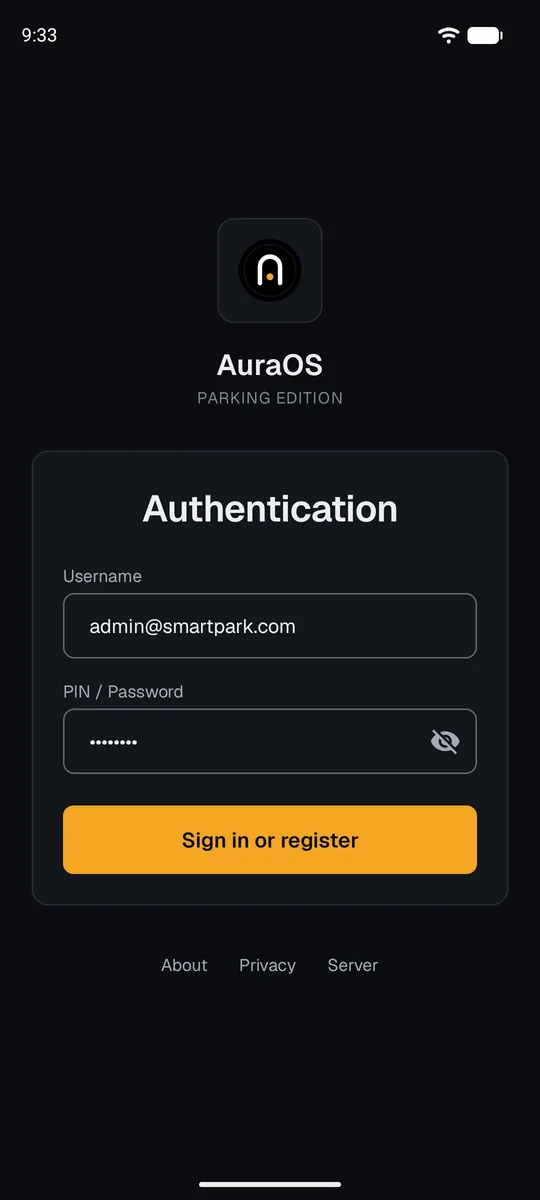
AuraOS sign-in: the AuraOS mark above an email and password form

Sign-in · email, password and biometrics

01 · 2026

AuraOS

Local-first parking access control

Replaces the paper log at a parking lot with an app for the guard on rounds and a self-service kiosk. Keeps working offline through a custom change journal and field-level merge, syncing to a NestJS and PostgreSQL backend; operators sign in with biometrics backed by hardware keys.

  • Kotlin
  • Room
  • NestJS
  • PostgreSQL · Prisma
  • SSE · FCM
  • Android Keystore

Control panel · orders, mileage alerts, finances and inventory by period

02 · 2026

AutoNex

Workshop ERP, from vehicle intake to delivery

Service orders that record mileage, fuel level, prior damage and reported faults; a vehicle history per plate or VIN; inventory with minimum-stock control; mileage-based maintenance reminders over WhatsApp; and official BCV exchange rates scraped, approved and published on schedule.

  • ASP.NET Core
  • PostgreSQL
  • Angular
  • Ionic · Capacitor
  • SignalR
  • wa-notifier · NestJS
  • Biometric auth (mobile)
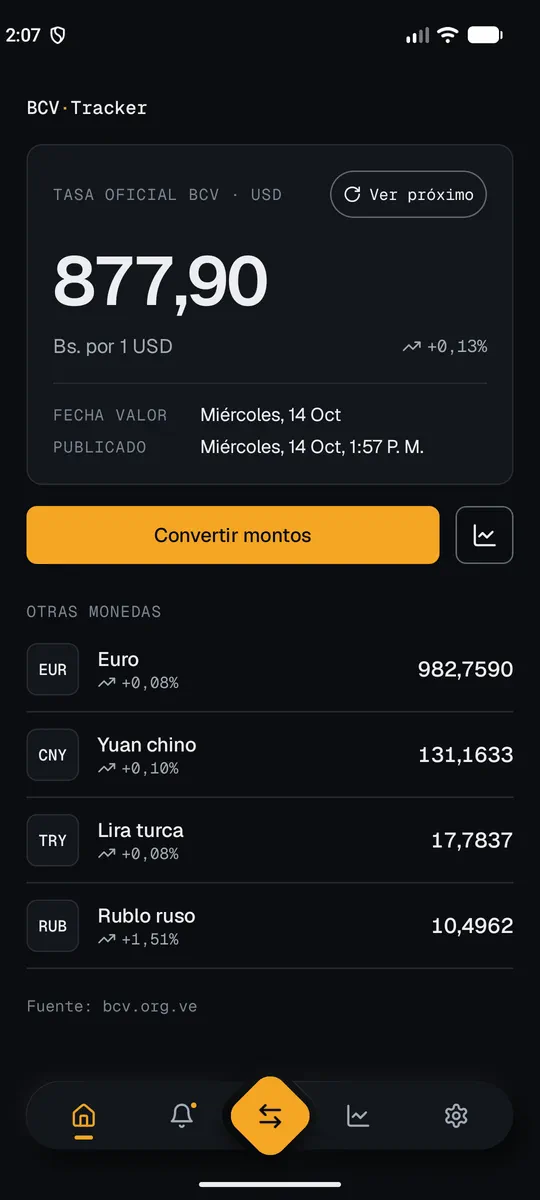
BCV Tracker home screen: the official US dollar rate with its value date and the other selected currencies

Home · official rate and selected currencies

03 · 2026

BCV Tracker

Official Venezuelan exchange rates, on device

Tracks the official exchange rates the Central Bank of Venezuela publishes, notifies when the next bulletin is out, and keeps a full history with a converter. Everything runs on the phone: no backend, no account, no analytics; the only server it talks to is the Central Bank's own site.
  • Kotlin
  • Jetpack Compose
  • Room
  • WorkManager
  • OkHttp · jsoup
  • Custom TLS trust

Experience

  1. Aug 2026 – nowSenior Software DeveloperP&A Asociados Gerenciales · consulting for a universal bank, PCI-DSS
  2. Mar – Aug 2026Software ConsultantFreelance · automotive workshop ERP
  3. 2025 – 2026Information Security ManagerINAC · GPG-based procedure for exchanging sensitive data with external entities
  4. 2023 – 2024Software DeveloperINAC · high-demand REST API with rate limiting, JWT and route-level permissions
  5. 2023Software DeveloperBolivariana de Aeropuertos
  6. 2022 – 2023Development & Systems CoordinatorInmobiliaria Nacional · led the development team; infrastructure on Proxmox

MSc Cybersecurity, CEUPE (expected 2027) · BEng Computer Engineering, UNEXCA

English (B2) · Russian (A1)

Open to remote roles as a senior engineer or team lead

contact@luis-gutierrez.dev

03 · 2026

BCV Tracker

Official Venezuelan exchange rates, on device

Tracks the official exchange rates the Central Bank of Venezuela publishes, notifies when the next bulletin is out, and keeps a full history with a converter. Everything runs on the phone: no backend, no account, no analytics; the only server it talks to is the Central Bank's own site.

Problem

The Central Bank publishes the official rate on its website, usually the afternoon before the business day it takes effect, and there's no API. People reload the page to see whether the next rate is out. The site also serves a broken TLS certificate chain, so ordinary HTTP clients refuse to connect at all.

Role

Sole developer: product, design, the Android app and the scraping and parsing pipeline.

Constraints

  • No official API: the homepage markup and the quarterly spreadsheets are the only sources, and either can change without notice.
  • The site's certificate chain is incomplete, but turning off certificate validation was never an option for an app that shows financial data.
  • No backend by design: the app should only ever talk to the Central Bank, which also means no push notifications from a server.
  • A wrong official rate is worse than a late one: people use it to price and pay.

Key decisions

Complete the broken chain instead of disabling TLS checks

The server omits the intermediate certificate its leaf was issued by. The app bundles that intermediate and the public root it chains to, appends them when the presented chain is incomplete, and still runs full path validation; hostname verification stays on. The fallback only applies to the Central Bank's host, and the platform trust store is tried first, so every other host gets ordinary validation. Trade-off: if the bank changes certificate authority, the bundled anchors need an app update.

On-device scheduling, no server

A WorkManager job checks about every 15 minutes on business days, from the hour the user picks, and stops once the next bulletin is registered. It keeps the app backend-free and private. The trade-off is timing: Android's battery management and aggressive OEM restrictions can delay a check, so the app promises "shortly after it's published", not a minute-exact alert. A server pushing to every device would be faster; it would also be infrastructure to run and a second party in the data path.

Never guess the value date

An early version fell back to "next business day" when the date on the page couldn't be read. That breaks on bank holidays, and a guessed future date also told the background check the next bulletin was already in. Now an unreadable or implausible date (outside a window around today) fails the check and the next run retries; rates must be plain positive numbers. A markup change shows up as failed checks instead of a wrong rate presented as official.

Backfill history from the quarterly spreadsheets

The homepage lists only five currencies and today's rate. The bank's quarterly .xls archive carries the full 21-currency set for every business day, so the app imports it on first launch and merges it with homepage bulletins by value date, without duplicating a date it already has. Trade-off: the .xls parser (JExcelAPI) is no longer maintained; it only ever reads files from the TLS-validated official origin, and replacing it is on the list.

Architecture

Single-activity Kotlin app with Jetpack Compose and a ViewModel. Room stores bulletins keyed by value date. OkHttp with a host-scoped, chain-completing trust manager fetches the homepage (parsed with jsoup) and the quarterly .xls files (parsed with JExcelAPI). A periodic WorkManager job runs the check and posts the notification.

Outcome

A working app being prepared for its Play Store release. Unit tests cover the HTML and spreadsheet parsers, including the rejection rules for implausible dates and non-numeric rates. Before release I ran a source-level security review: no vulnerabilities, and the hardening it suggested (host-scoped TLS fallback, strict numeric and date validation) is in. No CI yet.

What I'd do differently

I'd design the failure path first. The "next business day" fallback looked harmless and turned out to be the one way the app could show a wrong rate as official; failing closed should have been the starting point. I'd also set up CI from the first commit and pick a maintained spreadsheet parser from the start.

Stack

  • Kotlin
  • Jetpack Compose
  • Room
  • WorkManager
  • OkHttp · jsoup
  • Custom TLS trust